
Not All Knowledge Comes from College
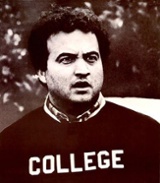
Do you really need to go to college? If your heart’s not in it, you can’t find a field of study that excites you, and your college degree doesn’t help your job prospects, the answer may be no. But what can you do without a college degree? Plenty, as it turns out. And there’s also plenty you can do that requires putting your brain to good use. Whatever you do, just don’t end up like John Blutarsky (the character played by John Belushi in Animal House), who said when he got susupended: “Six years of college down the drain!” And then there was Dorfman, who was admonished, “Fat, drunk, and stupid is no way to go through life, son.”
My grandfather was a tradesman
My grandfather, Allison Sr., was a tradesman. Born in 1909, he came of age just about the time the Great Depression hit and had to take whatever work he could get to help support his family. The second oldest of five boys, he took that responsibility seriously. His older brother, my Uncle T., also worked in the trades, but the younger three were able to go to college and get white collar jobs.
Although his younger brothers made more money than he did, I never saw him as anything but content with the life he was living and the work he was doing. He was an electrician, plumber, and HVAC contractor. Integrity and responsibility were more important to him than status or money.
When an emergency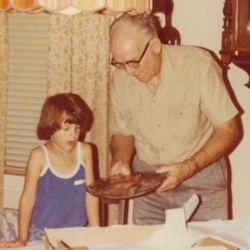 call came in late at night or on a Sunday, he put on his work clothes and went out to help. He knew his trades, he enjoyed his work, and he was happy with the life he created for himself and his family. As one of the direct beneficiaries of his life and his work, I have the utmost respect for how he lived and for people in the trades in general.
Pap-paw was a tradesman. He didn’t go to college. He didn’t put on fancy clothes to go to work. He wore khaki pants and a khaki shirt every day except Sunday. Yeah, he got dirty and sweaty working outside and in hot Louisiana attics, but he was doing something that people needed and he was good at what he did.
I was lucky that I got to spend two months each summer through my teen years being a gofer for him and my uncle. I probably got as much education in those two months than I did in the nine months I was in school. I’m also honored to share the same name with such a great man.
It takes smarts
Pap-paw didn’t need a college education to ply his trade, but he certainly needed a lot of knowledge. He understood compressors, blowers, the refrigeration cycle, tools, materials, and much more. I don’t know much about the early years of his career and how he learned all that he knew, but I imagine he took advantage of all the training and education opportunities he could find.
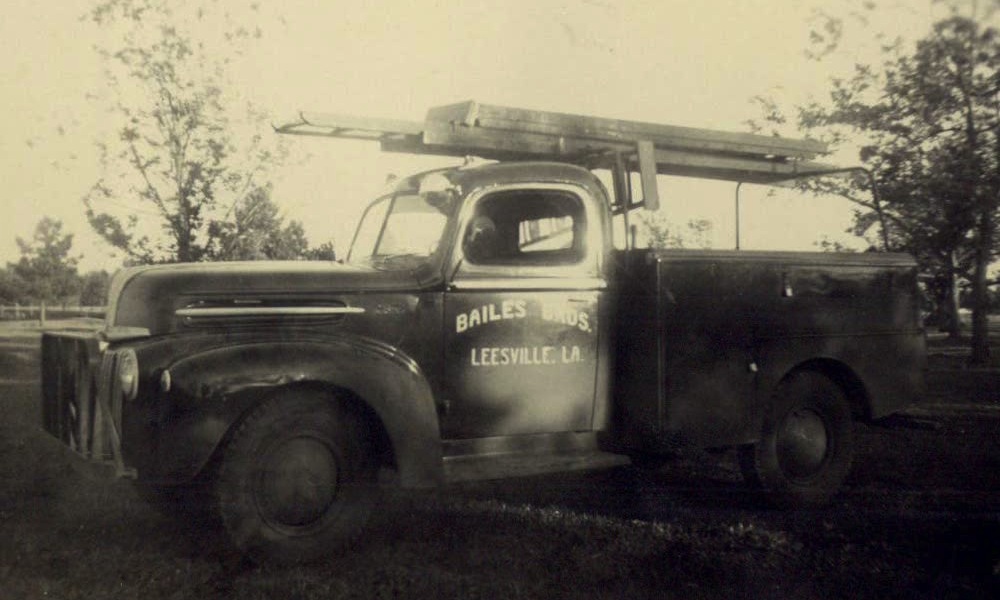
As a Frigidaire dealer when he was part of Bailes Brothers, he no doubt got plenty of training from Frigidaire. Today, all or most of the big companies in the trades offer different kinds of training. Mitsubishi has a lot of different types of training for designers, installers, and service techs of their mini-split heat pumps. Want to learn hydronic distribution systems? Check out the training opportunities with Taco FloPro. They have a beautiful new training center in Rhode Island that I hope to visit soon.
If you want training in a trade, it’s out there. It’s a really exciting time to be working in the trades, in my opinion, because there’s some much cool new technology and a lot of new thinking is being applied to them as well.
For example, in the world of construction and mechanical systems, building science is changing the way we look at buildings. Traditional education and training programs are incorporating building science. There are also new certifications that complement the traditional: RESNET Home Energy Rater, BPI Building Analyst… The knowledge is available. I hear some blogs even give it away for free!
National Tradesmen Day
This past Friday, 21 September, was National Tradesmen Day. We have huge needs in this country, and we also having an aging workforce in the trades. If you want opportunities, they’re 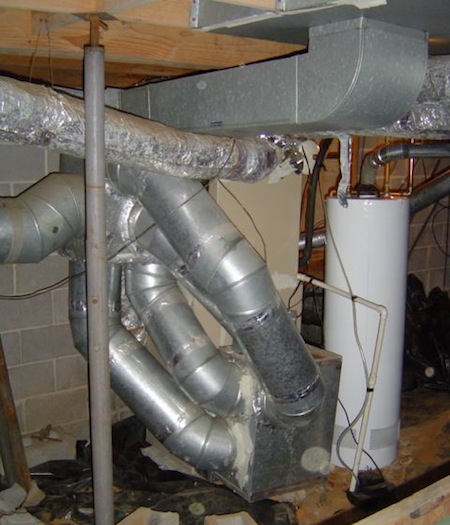 available in spades in the trade. There are a lot of workers who think that doing things the way they’ve always done them is the recipe for success. There’s a lot of bad work out there as a result. See Exhibit A, this odd duct system I wrote about last week. (This may well have been a DIY job, but still, someone’s gotta fix that crap.)
We need people who understand how things work, have the mechanical aptitude to make them work, and are willing to get to work. These are jobs that can’t be outsourced. We need people right here at home to do them.
I can’t say this any better than Mike Rowe, the host of the show Dirty Jobs. On the Go Build Georgia website, you can watch some great videos where he makes the case for working in the trades. Go watch the videos! Really. They’re well worth it. The title of this article is a quote from the Alternative Education video on that page.
Why should you listen to me?
Let me end on a personal note. You may wonder why you should listen to some guy with a PhD in physics telling you to consider skipping college. Yes, I got a bachelors degree and then went to school for another seven years. If I’d found the world of building science when I was younger, though, I may well have foregone some or all of that graduate education.
I don’t need a PhD in physics to do what I do now. The physics background is indeed handy, but aside from the training in how to think that I got in grad school, I don’t use any of the advanced education I got there.
If you want a college degree (or 2 or 3 or 4), by all means do it. But don’t do it because you feel like that’s the path you have to follow, that without a degree, your prospects will be limited. Do you think Bill Gates or Steve Jobs felt like their prospects were limited because they didn’t have degrees? They didn’t work in the trades, which may mean that the kind of opportunities they found in computers are still available there.
Allison A. Bailes III, PhD is a speaker, writer, building science consultant, and the founder of Energy Vanguard in Decatur, Georgia. He has a doctorate in physics and writes the Energy Vanguard Blog. He also has written a book on building science. You can follow him on Twitter at @EnergyVanguard.
Related Articles
The Most Important Lesson I Learned in Grad School
Comments are closed.
This Post Has 14 Comments
Comments are closed.
I love the tribute to Pappaw!
I love the tribute to Pappaw! Oh, and the picture of course. I’ve said for years “a college education doesn’t necessarily make a person smart,” yet here I am back in school! 🙂 Love you Allison!
Cheers, Allison.
Cheers, Allison.
There’s a wonderful essay here (http://www.nytimes.com/2009/05/24/magazine/24labor-t.html?pagewanted=all) by Richmond, VA-based Matthew Crawford on this very topic. He turned it into a full-length book titled “Shop Class as Soulcraft”. Matthew is also a Ph.D. and worked as an electrician when he was younger. For a short period of time, he had a white-collar job running a D.C. “think-tank”, but gave up that position to start a motorcycle repair shop in addition to some teaching and his new-found fame as a writer.
One of his main points is that, for example, his work on motorcycles works his brain many times more thoroughly than his white collar work ever did.
Wendell Berry has made related points regarding white collar work (versus “agrarian” work) in various essays. The best collection of his agrarian essays can be found in “The Art of the Commonplace”. Here’s one of my favorite passages (from Feminism, the Body, and the Machine): “Is the life of a corporate underling – even acknowledging that corporate underlings are well paid – an acceptable end to our quest for human dignity and worth? It is clear enough by now that one does not cease to be an underling by reaching ‘the top’. Corporate life is composed only of lower underlings and higher underlings. Bosses are everywhere, and all the bosses are underlings.”
Come’on Allison, you know
Come’on Allison, you know good and well your PhD in physics is absolutely essential…….for your juggling skills! haha
Allison, I hate to point out
Allison, I hate to point out an error in such a great post, but it was Flounder, not Blutarski. Blutarski was sporting a GPA of 0.00 at the time, though.
Allison, I was curious about
Allison, I was curious about your hotlink on your “how to think” blog referenced above. I am glad I was. Awesome. And a couple of the comments were equally well thought out and written. T.C.
And I’m proof that you can
And I’m proof that you can even get invited to Joe’s “Stinkin’ Building Science Summer Camp” without a college degree! 🙂 Great article, and I second the statement that every tradesperson will get his/her batteries recharged by watching Mike Rowe’s testimony before the congress on the value of skilled labor. A fantastic 8 minutes.
Thanks Allison for the
Thanks Allison for the picture “It’s my screen saver now,” lol. And I understand your’e meaning. I’m glad Dad was willing to teach me the basics in Home electrical/plumbing. Don’t know if you remember at his Houston office he had me installing and running many/mulitiple outlits on the wall closest to the busy street. Have to go I have a webinar from Westinghouse Solar to log in for.
Allison, Reminds me of Bucky
Allison, Reminds me of Bucky Fuller, designer of the Geodesic dome,he also dropped out of college. “Thinking outside the box” and “doing more with less” are quotes to his credit. He asked his college professors, “how much does a house way? None of the professors knew. So he said if he was going to design a really efficient home, he had to forget all he learned in college (Harvard) I just finished a great inspiring book about Bucky “A Fuller View”. In the early 1970’s, I heard him speak at Sandia Labs in NM, I was a student at Denver University. He inspired me to start my retrofit company in 1975 after 34,000 retrofits, we still enjoy our work, thinking outside the box, but working inside the box, to make our boxes more comfortable as well as energy efficient. Doing more with less! Thank-you Bucky and Allison!
Allison,
Allison,
I’m living that dream! Similar experience with my Pop-Pop. Tried college – quit with a 4.0-ave in my 2nd year. Started as a plumbing apprentice at the firm I ended up buying. Doing what I love & earning a very good living.
Too true. I was pushed to go
Too true. I was pushed to go to college and subsequently dropped out. Worked landscaping which I loved but after a couple hernias I had to accept my small frame was not made for doing hard labor. So, I went back to college again and now work in health care as a Nutritionist. I am continually comparing doctors to mechanics. One does surgery on cars; the other does surgery on you. They both get messy and use stainless steel tools. But, most people are more likely to take their car to a mechanic for a tune up than go to a doctor for a physical.
Great read!
Great read!
Immediately after graduating with my MBA (ten years after getting an engineering degree), I took an $8 an hour job as a carpenter’s apprentice. I also took evening classes in a carpentry program at a local technical college. I learned more in the next year about the work that I really wanted to do – build things well – than I had learned in all my time in college and grad school. I now manage a construction program and teach part-time at the same technical college I attended. My wife is a high school teacher, and we both see the results of an education system that devalues learning trade skills. Many of my students have never built or fixed anything in their life. Not every high school student has the desire or the capacity to complete the 4-year college track. This has as much to do with the high failure and drop-out rates as the societal issues that receive most of the blame (poor parenting, corrupt school systems, drugs, gangs, etc.). Trades are an important part of our society and should be an important part in our education.
The other thing that Americans are doing is bankrupting our future generations by burdening kids with mountains of student loan and credit card debt. The private, for-profit colleges especially target uninformed people who are desperate to improve their condition. There was a time when you only went to college if you could earn a scholarship or could afford to pay the fees. I’m not suggesting that we cut-off low-income people who see higher education as their way up the socio-economic ladder. But we should first educate them on how the potential increase in income balances (or doesn’t) with the costs of student loans and other related debt, schools to avoid, and ways to pay for school without taking on excessive debt.
Great article! There’s so
Great article! There’s so much pressure for EVERYONE to go to college when it’s not necessarily the best thing for everyone. Thanks!
enjoyed this piece. Our
enjoyed this piece. Our society is filled with folks who’ve been educated beyond their ability to understand what they know. knowledge and understanding are two different things. Wisdom and understanding are two different things. In the perfect scenario one would have the knowledge to do something, the understanding of how to do it and the wisdom to go ahead and do it!!!
Thanks for reposting Allison.
Thanks for reposting Allison. Looking forward to seeing Andy at Taco in May, and hope you can make it up later this year as well. It’ll be like Woodstock, only for heaters instead of hippies. Three days of peace, love and hydronics….